JEE PYQ: Motion in a Straight Line - Question ID 58d2ee2b36b9 (JEE Main 2025)
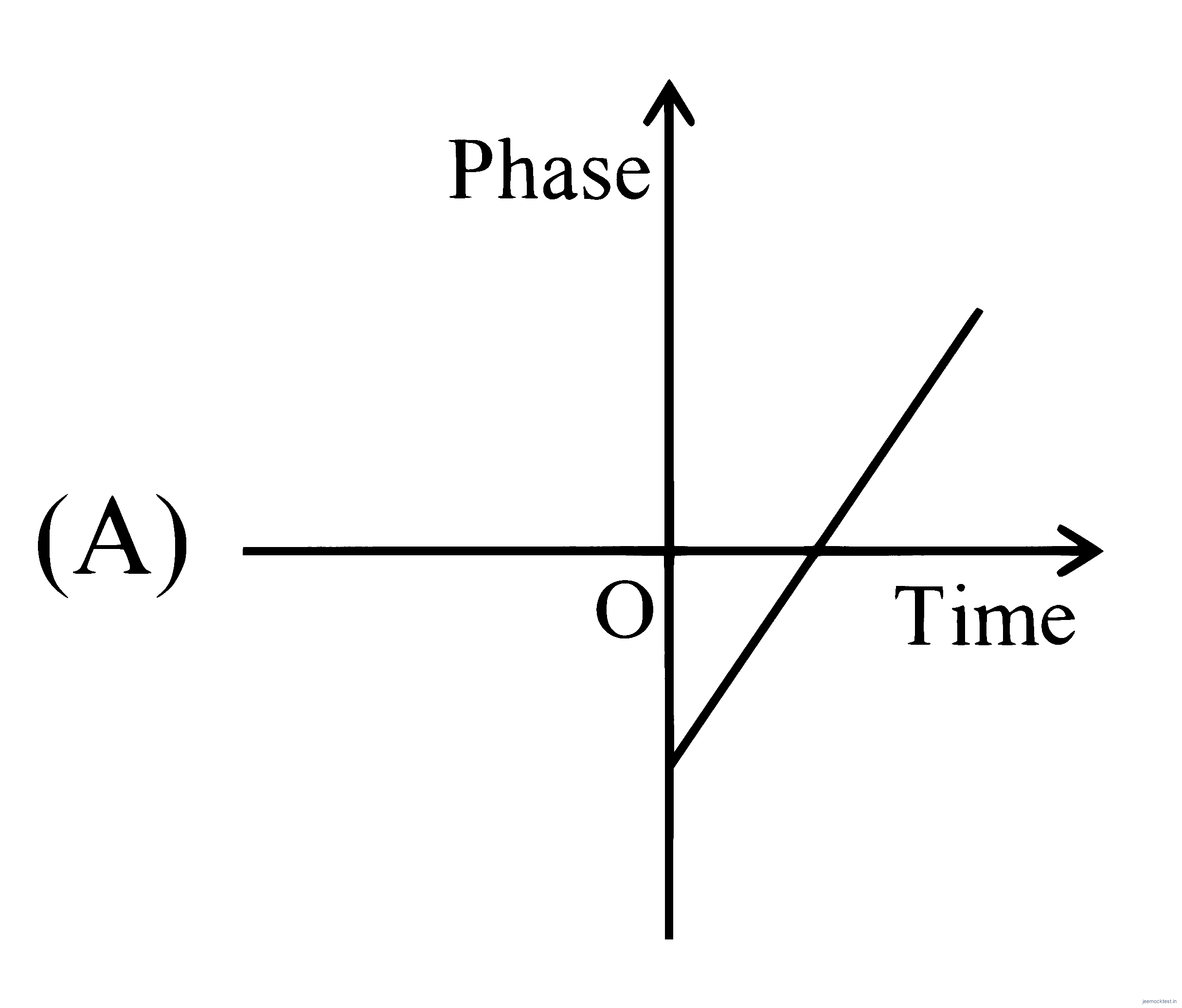
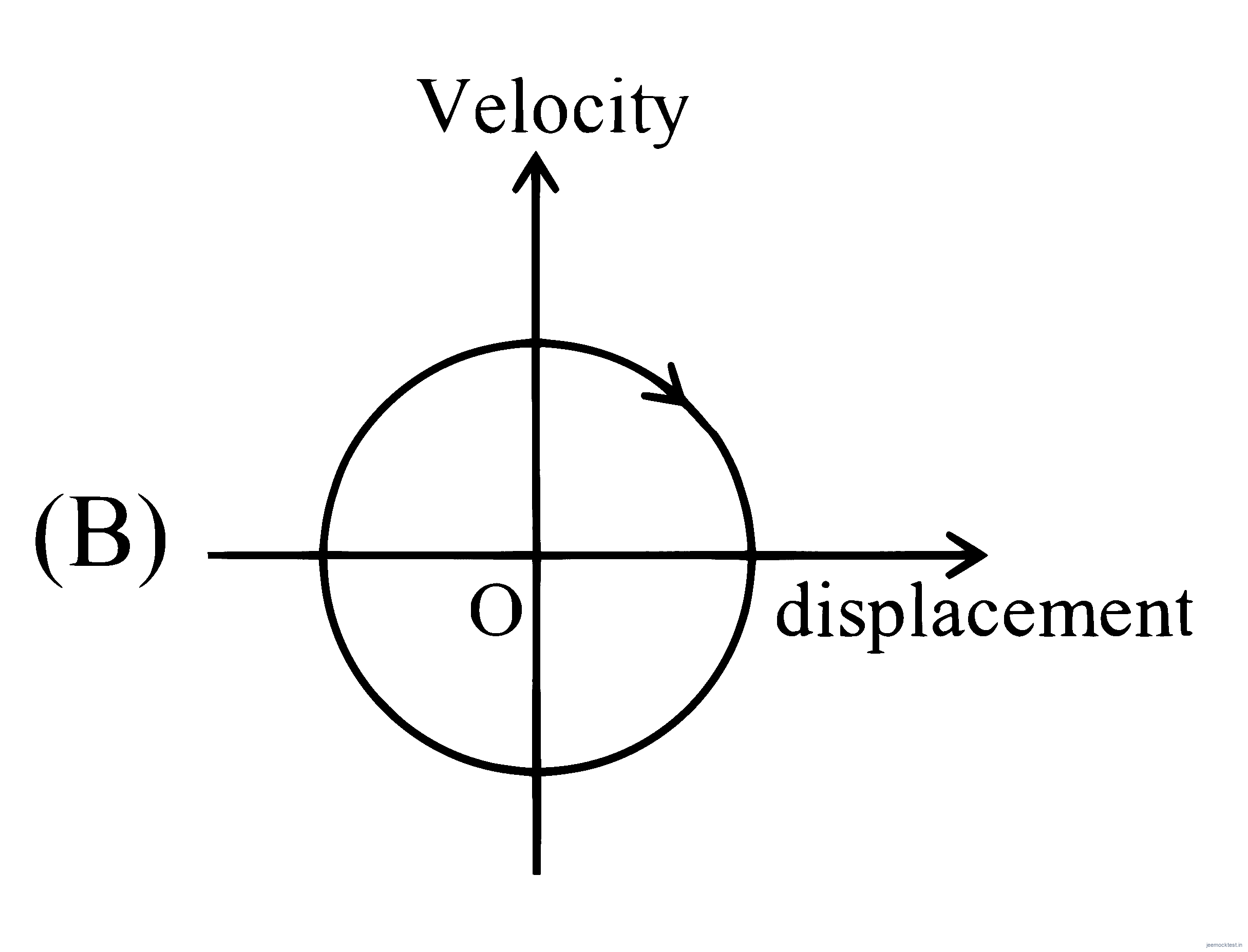
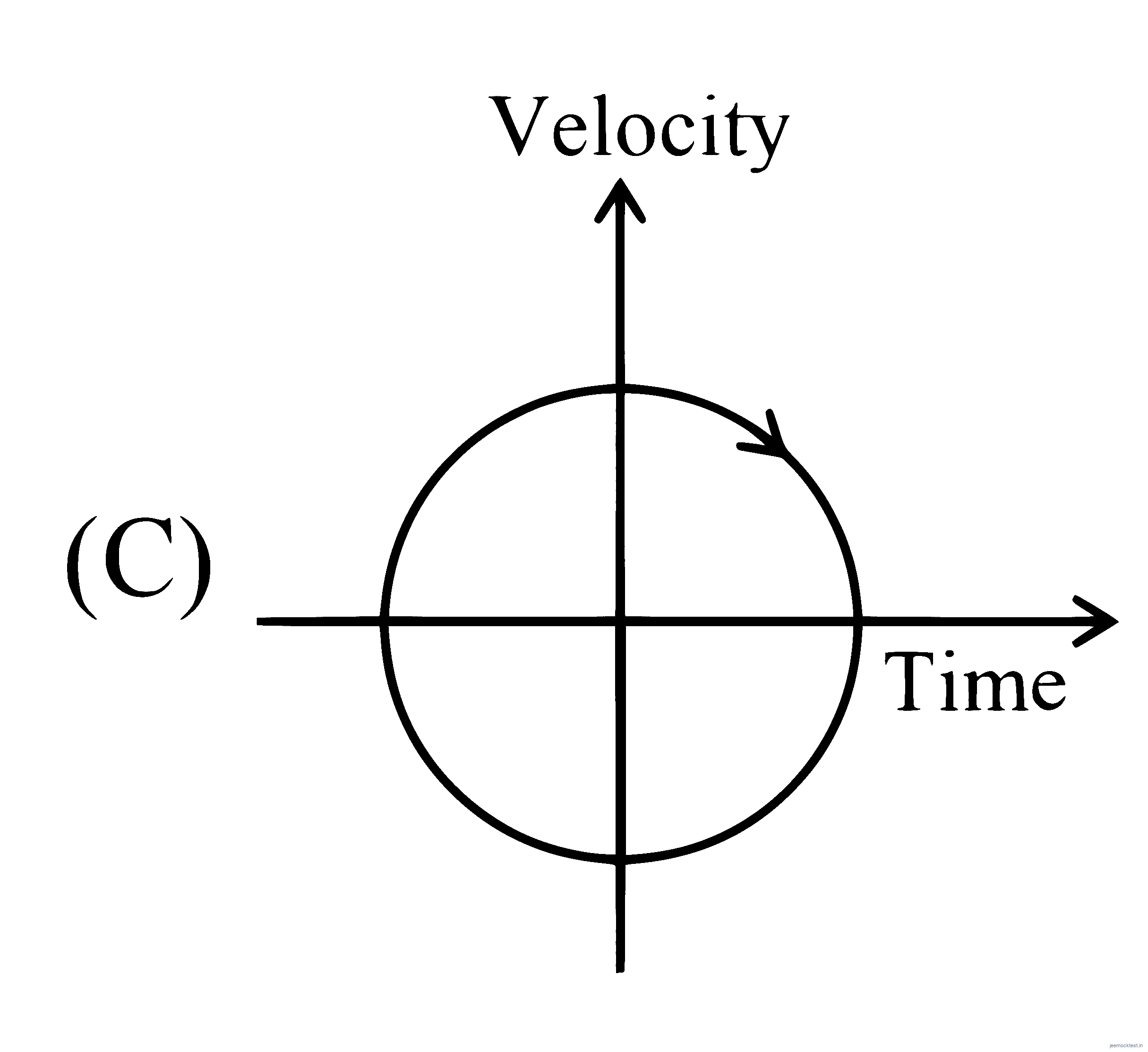
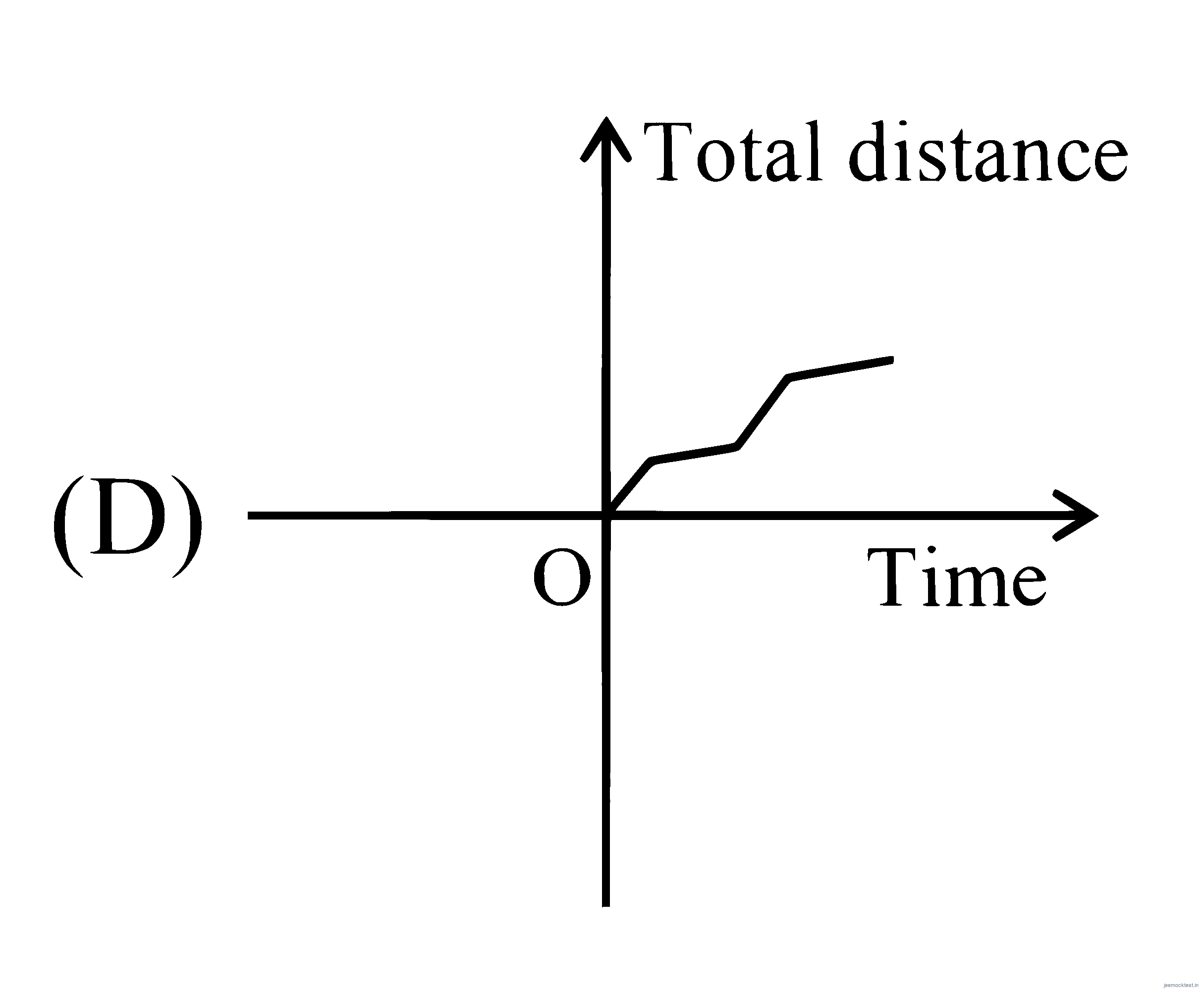
Choose the correct answer from the options given below :
Select Option
Step-by-step Explanation
In one-dimensional motion, a particle moves along a straight line. Its position \( x(t) \) is a single-valued function of time, meaning at any instant \( t \) there is exactly one position. Consequently:
- The position–time graph must be a single curve without loops or folds (no “overhangs”).
- The velocity–time graph must be a single-valued function of \( t \), because velocity \( v(t) = \frac{dx}{dt} \) is uniquely determined at each instant.
- The acceleration–time graph must likewise be single-valued.
Key relations:
Step-by-Step Derivation:Examine each graph in turn:
-
Graph A (position–time):
The curve is smooth and never “doubles back” on itself. At each \( t \) there is exactly one \( x \). Hence it can represent one-dimensional motion.
-
Graph B (velocity–time):
The curve is a single-valued function of \( t \). Although it has sharp corners (discontinuous acceleration), at no instant does the velocity take two values. Therefore it is admissible.
-
Graph C (position–time):
The curve loops back on itself, producing two different positions at the same time. This violates the single-valued requirement for \( x(t) \). Hence it cannot represent one-dimensional motion.
-
Graph D (acceleration–time):
The graph is a single-valued step function. Although the acceleration jumps, at each instant there is only one value. Thus it is physically acceptable.
Conclusion: Graphs A, B, and D satisfy the single-valued condition; graph C does not. The correct option is therefore C: A, B and D only.
Common Traps & Exam Tip:Students often confuse “smoothness” with “single-valuedness.” A graph can have sharp corners (discontinuous derivatives) yet still represent valid one-dimensional motion, provided it never assigns two positions (or velocities) to the same instant. Conversely, a smooth-looking loop in a position–time graph is always invalid.
Tip: Always check whether the curve is a function of time—if you can draw a vertical line that intersects the curve more than once, the graph cannot describe one-dimensional motion.
Related Questions from Motion in a Straight Line
A gas balloon is going up with a constant velocity of . When this balloon reached a height of 75 m , a stone is dropped from it and balloon keeps moving up with the same velocity. The height of the balloon when the stone hits the ground is m. (Take )
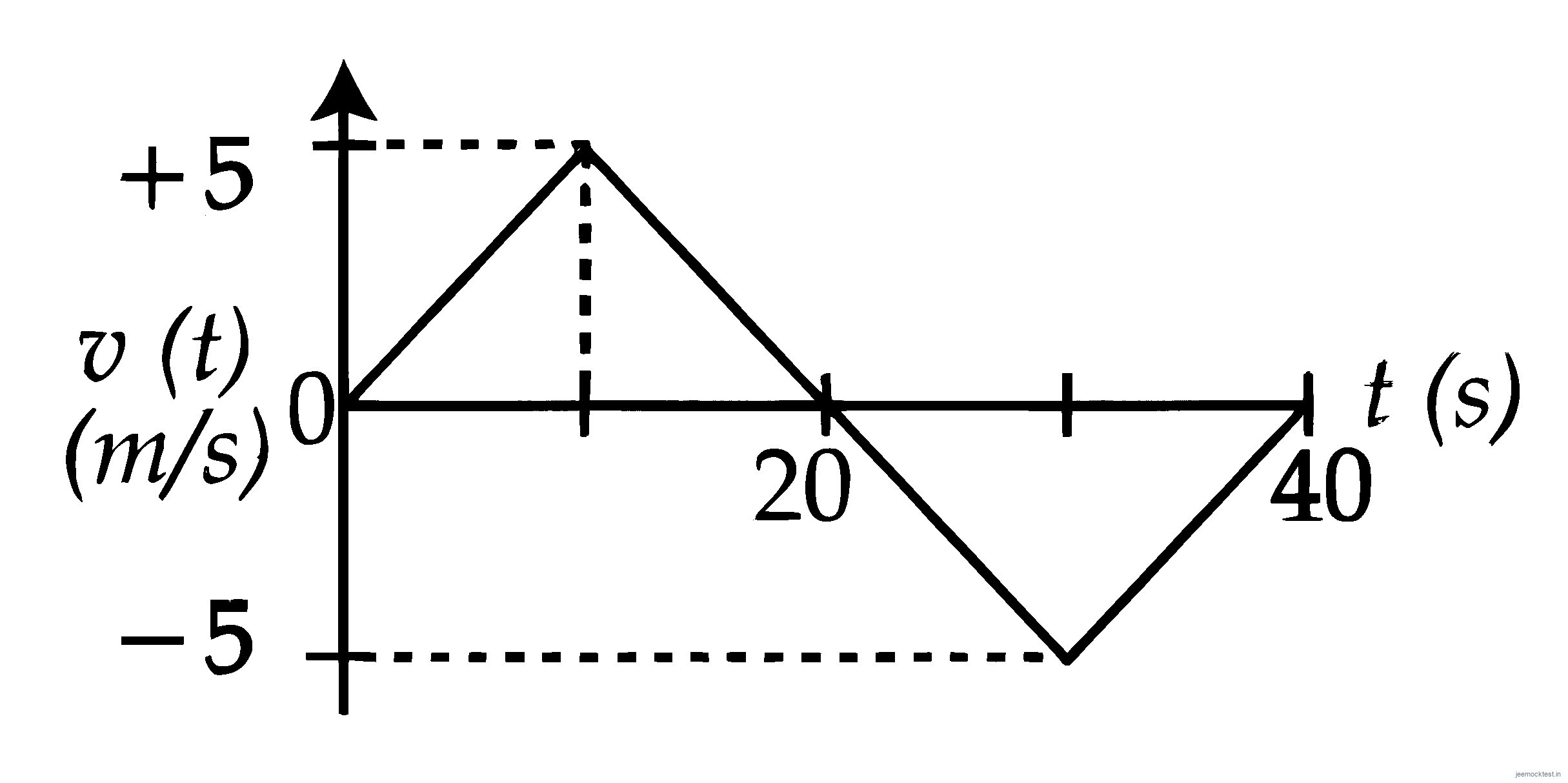
The velocity versus time plot of a particle is shown in the figure, for a time interval of 40 s . The total distance travelled by the particle and the average velocity during this period are, respectively
.
Two cars and are moving in the same direction along a straight line with speeds and , respectively such that car is moving ahead of car . A person in car throws a stone with a speed so that it hits the car with a speed of . The value of is .
A particle starts moving from time and its coordinate is given as
A. The particle returns to its original position (origin) 0.866 units later
B. The particle is 1 unit away from origin at its turning point
C. Acceleration of the particle is non-negative
D. The particle is 0.5 units away from origin at its turning point
E. Particle never turns back as acceleration is non-negative
Choose the correct answer from the options given below :