JEE PYQ: Motion in a Straight Line - Question ID 5257614cd9df (JEE Main 2023)
Match Column-I with Column-II :
| Column-I (-t graphs) |
Column-II (-t graphs) |
||
|---|---|---|---|
| A. | 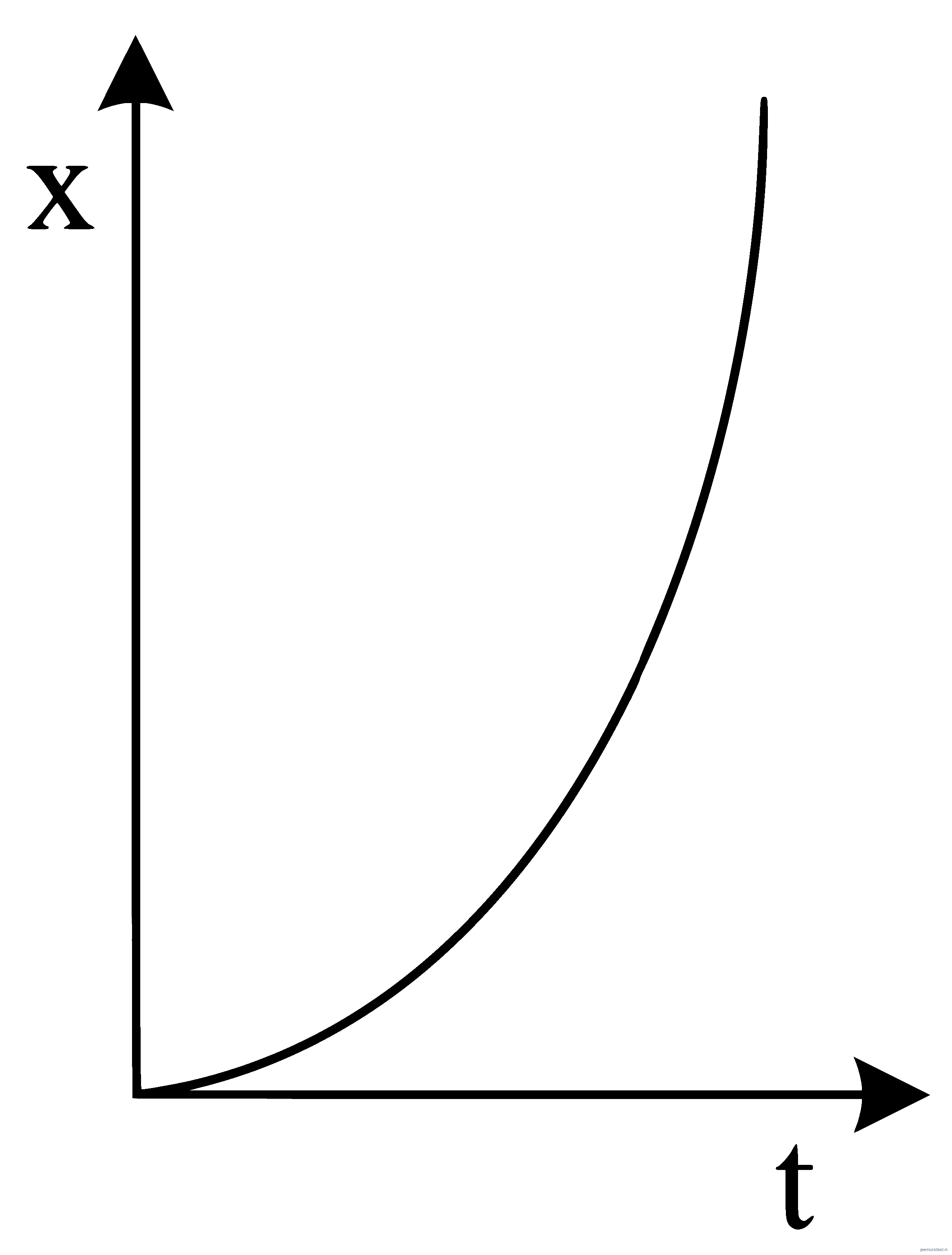 |
I. | 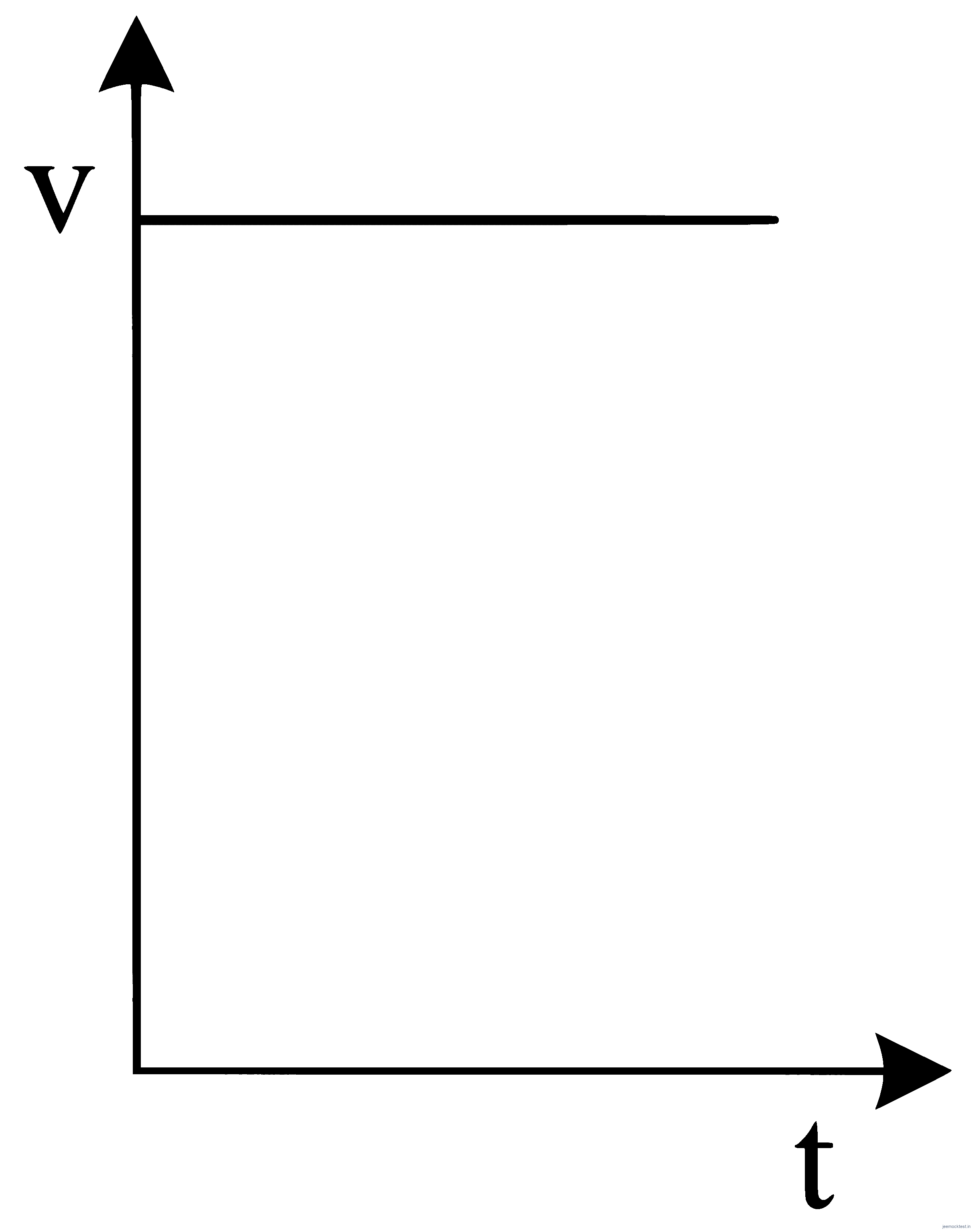 |
| B. | 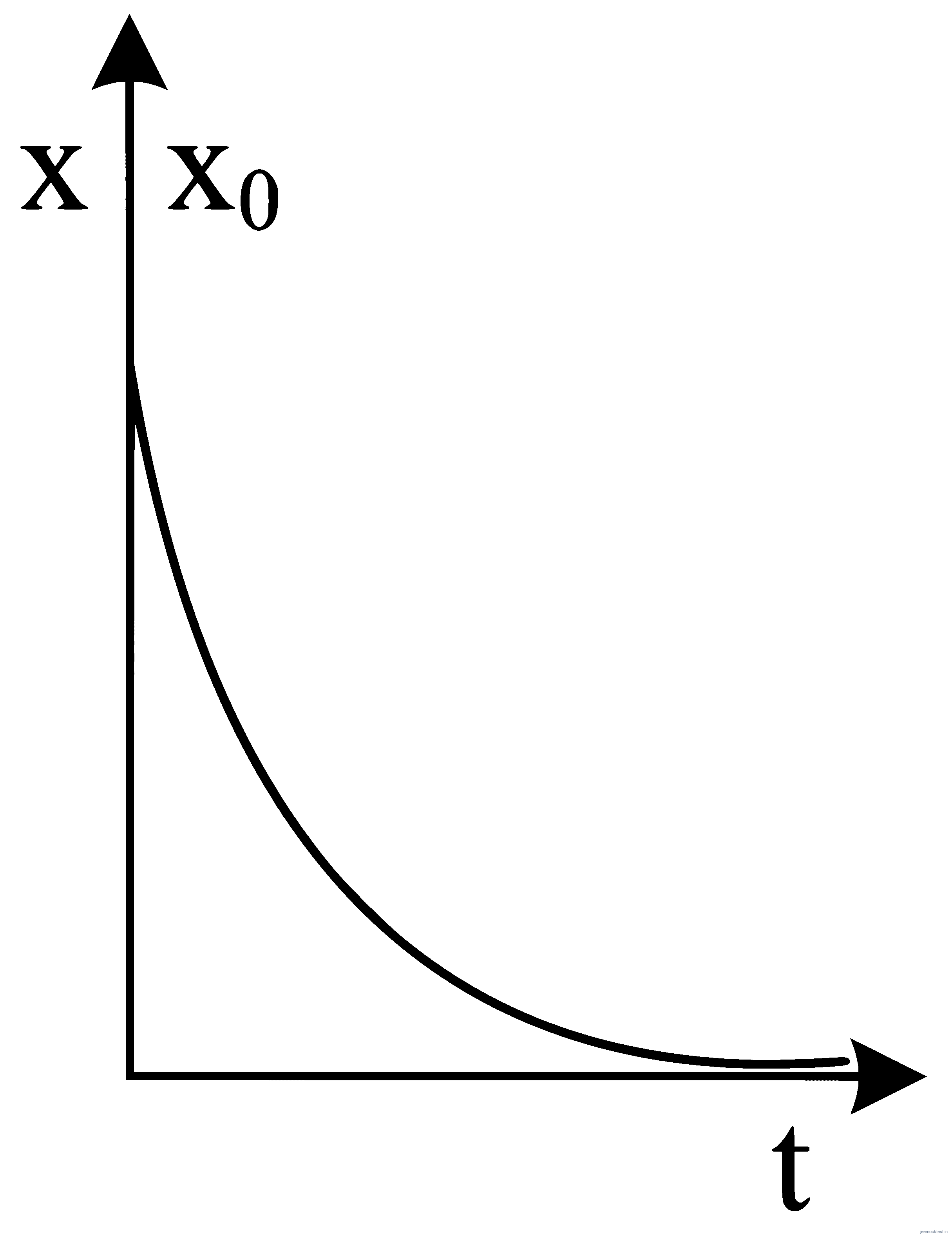 |
II. | 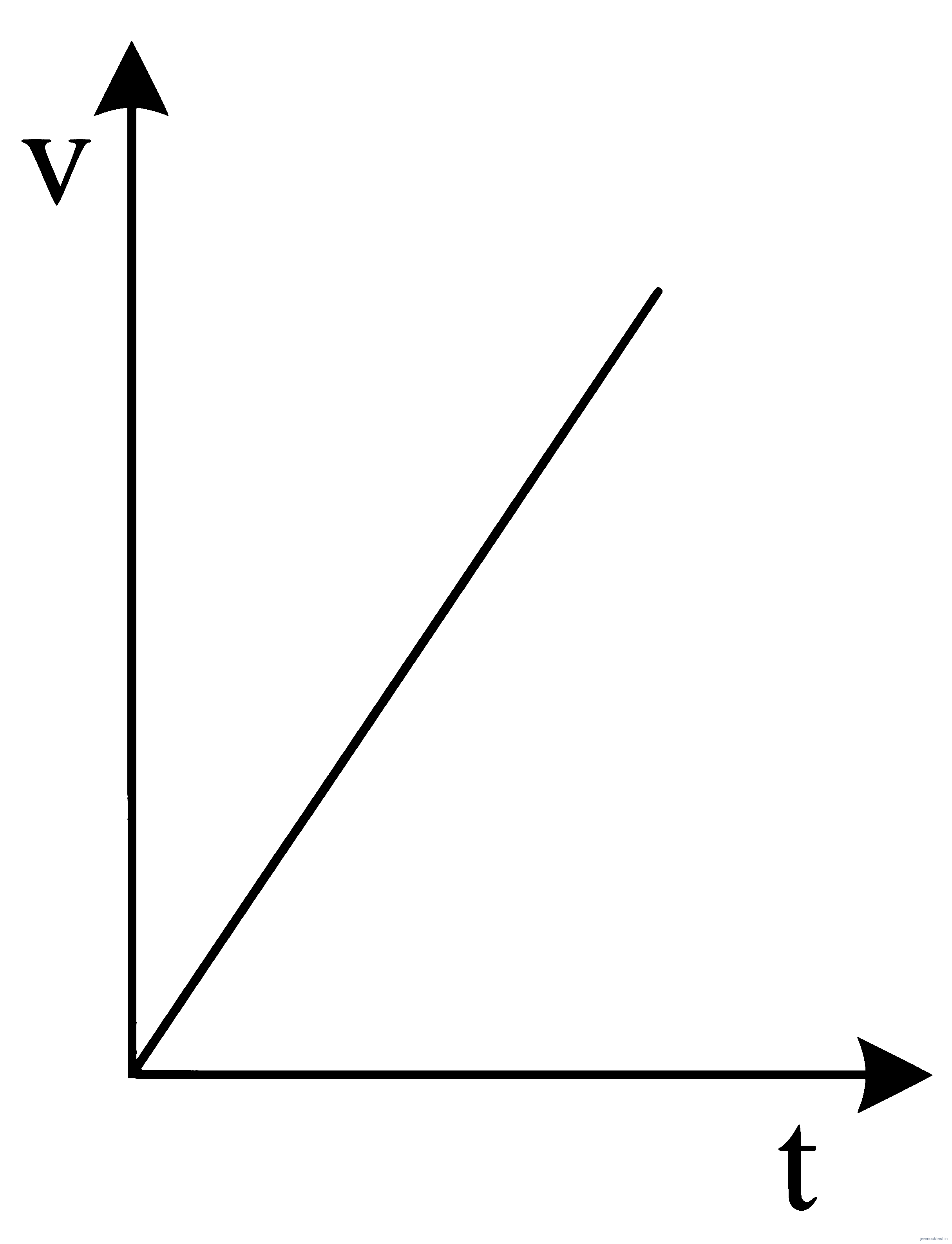 |
| C. | 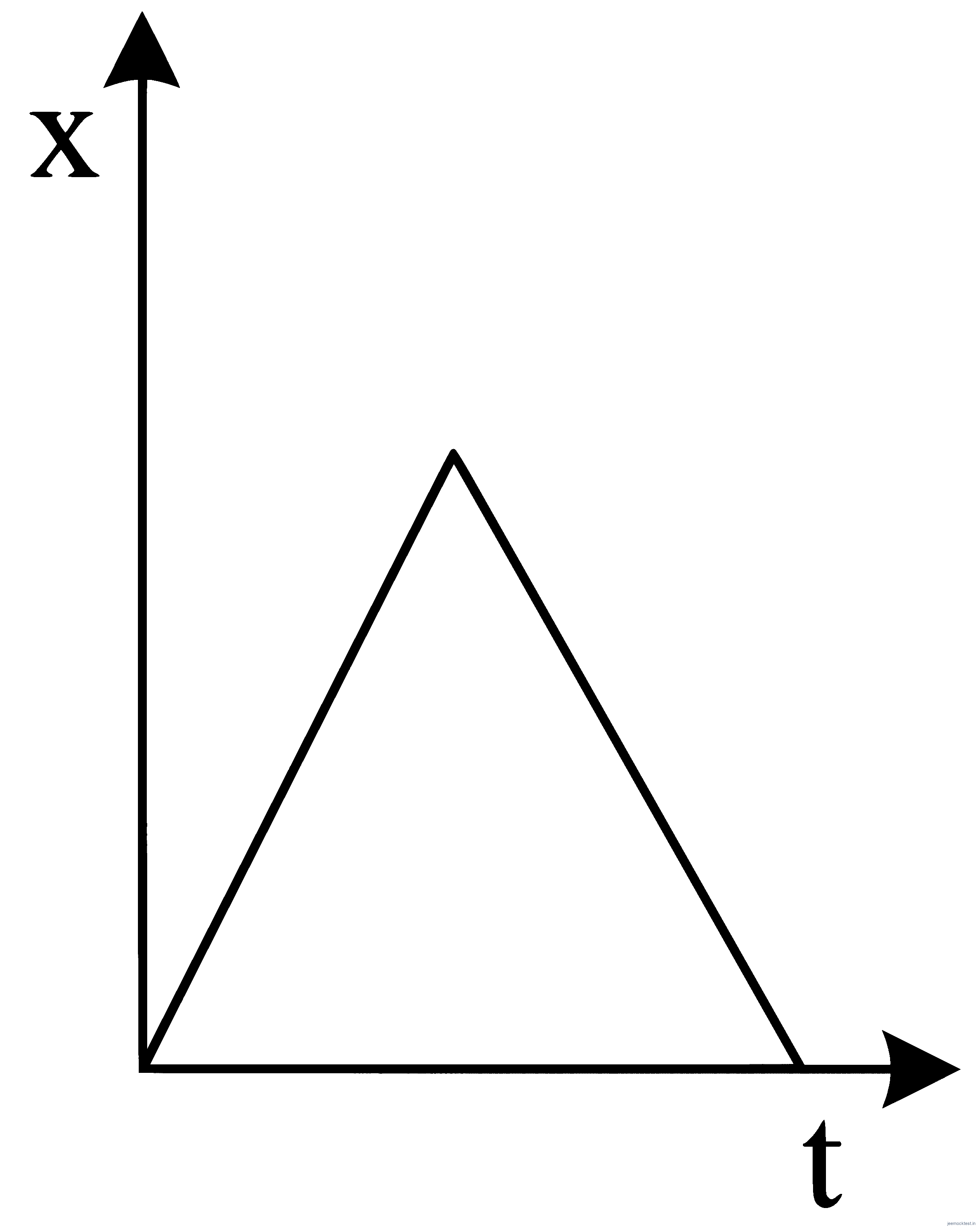 |
III. | 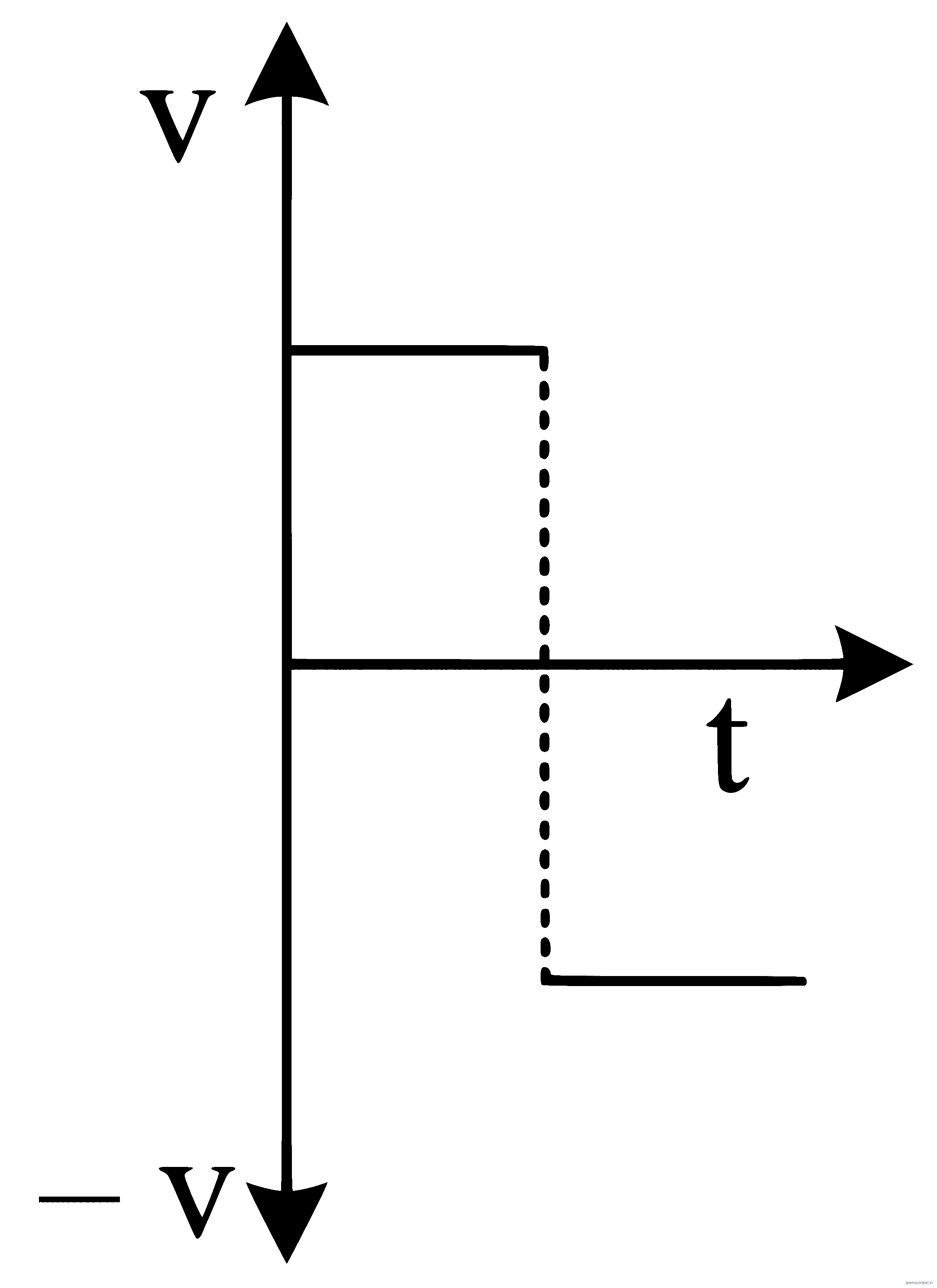 |
| D. | 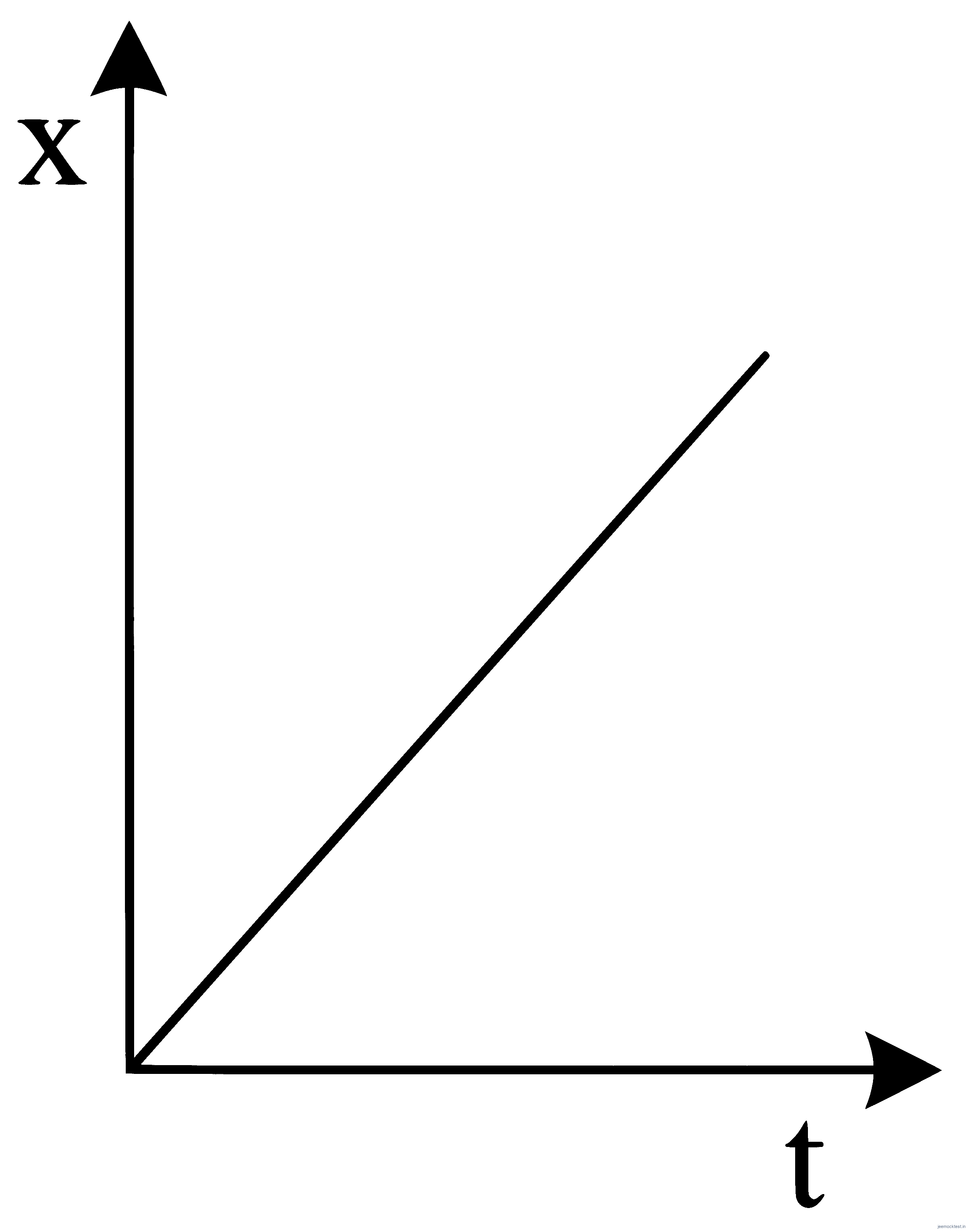 |
IV. | 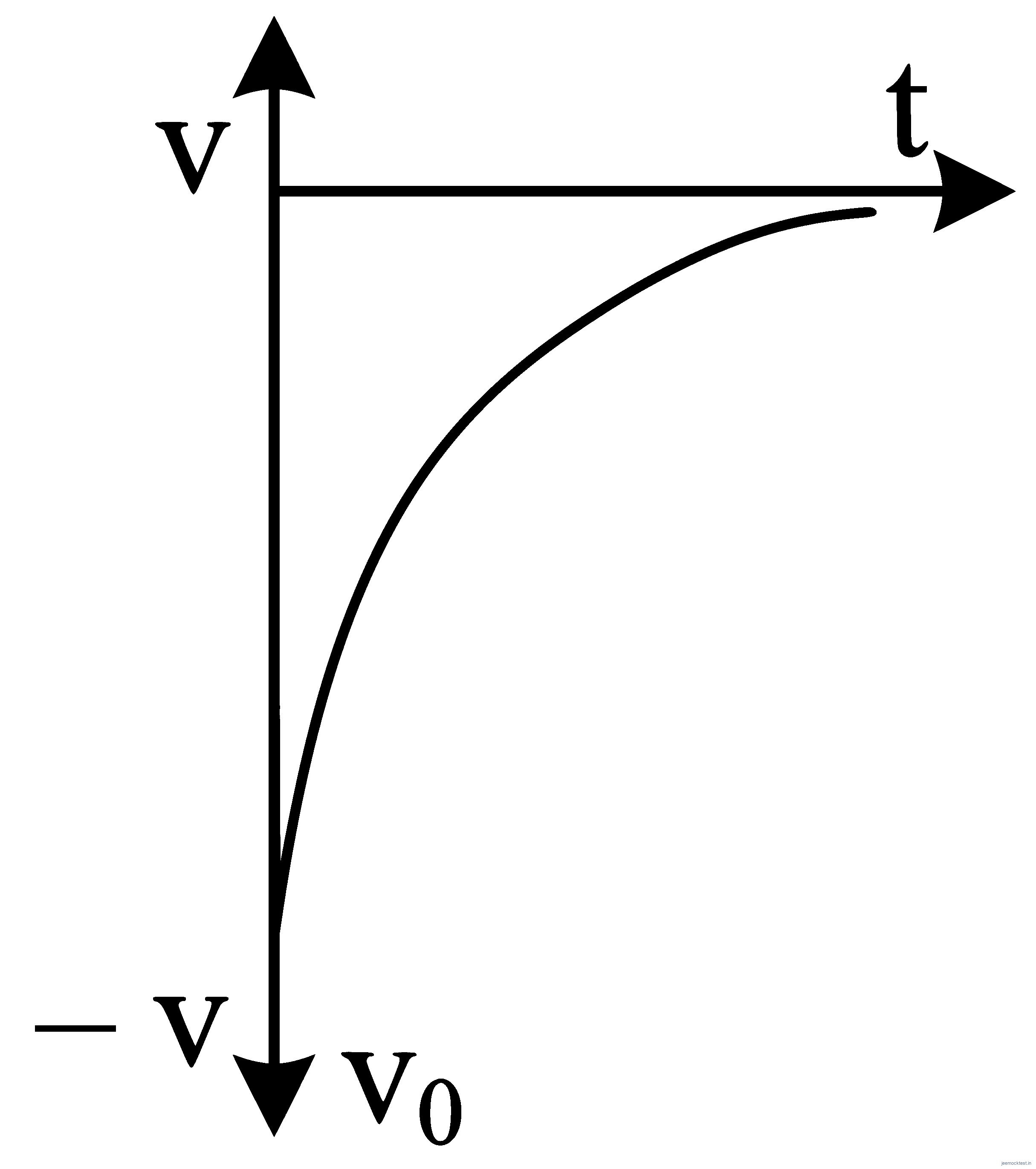 |
Choose the correct answer from the options given below:
Select Option
Step-by-step Explanation
In one-dimensional motion, the velocity \( v \) at any instant is the slope of the position-time (\( x \)-\( t \)) graph at that point. Mathematically, \[ v = \frac{dx}{dt}. \] Key observations:
- If the \( x \)-\( t \) graph is a straight line, its slope is constant, so the \( v \)-\( t \) graph is a horizontal line.
- If the \( x \)-\( t \) graph is a curve whose slope increases (becomes steeper), the velocity increases, giving a rising \( v \)-\( t \) graph.
- If the \( x \)-\( t \) graph is a curve whose slope decreases (becomes less steep), the velocity decreases, giving a falling \( v \)-\( t \) graph.
- A sudden change in the slope of the \( x \)-\( t \) graph corresponds to a jump (discontinuity) in the \( v \)-\( t \) graph.
Entry A:
The \( x \)-\( t \) graph is a straight line with positive slope, then a straight line with zero slope, then a straight line with negative slope.
- Positive slope \(\Rightarrow\) positive constant velocity \(\Rightarrow\) horizontal line above the time axis.
- Zero slope \(\Rightarrow\) zero velocity \(\Rightarrow\) horizontal line on the time axis.
- Negative slope \(\Rightarrow\) negative constant velocity \(\Rightarrow\) horizontal line below the time axis.
This matches the \( v \)-\( t \) graph in II.
Entry B:
The \( x \)-\( t \) graph is a curve whose slope starts positive and decreases continuously to zero.
- Initially steep positive slope \(\Rightarrow\) high positive velocity.
- Slope decreases smoothly \(\Rightarrow\) velocity decreases smoothly to zero.
This matches the \( v \)-\( t \) graph in IV.
Entry C:
The \( x \)-\( t \) graph is a straight line with positive slope, then a curve whose slope decreases to zero.
- Straight line \(\Rightarrow\) constant positive velocity.
- Curve with decreasing slope \(\Rightarrow\) velocity decreases from that constant value to zero.
This matches the \( v \)-\( t \) graph in III.
Entry D:
The \( x \)-\( t \) graph is a straight line with positive slope, then a straight line with negative slope.
- Positive slope \(\Rightarrow\) positive constant velocity.
- Negative slope \(\Rightarrow\) negative constant velocity.
- The abrupt change in slope produces a jump in the \( v \)-\( t \) graph.
This matches the \( v \)-\( t \) graph in I.
Putting it all together:
A \(\to\) II, B \(\to\) IV, C \(\to\) III, D \(\to\) I.
This corresponds to option B.
1. Confusing slope with height: Students sometimes think the value of \( x \) itself gives velocity, but velocity is always the slope of the \( x \)-\( t \) graph. 2. Missing discontinuities: A sharp corner in the \( x \)-\( t \) graph means an instantaneous jump in velocity, which must appear as a vertical step in the \( v \)-\( t \) graph. 3. Sign errors: A negative slope in \( x \)-\( t \) gives a negative velocity, so the \( v \)-\( t \) graph must lie below the time axis.
Exam tip: Always draw a quick sketch of the slope at key points on the \( x \)-\( t \) graph before matching to the \( v \)-\( t \) options.
Related Questions from Motion in a Straight Line
A gas balloon is going up with a constant velocity of . When this balloon reached a height of 75 m , a stone is dropped from it and balloon keeps moving up with the same velocity. The height of the balloon when the stone hits the ground is m. (Take )
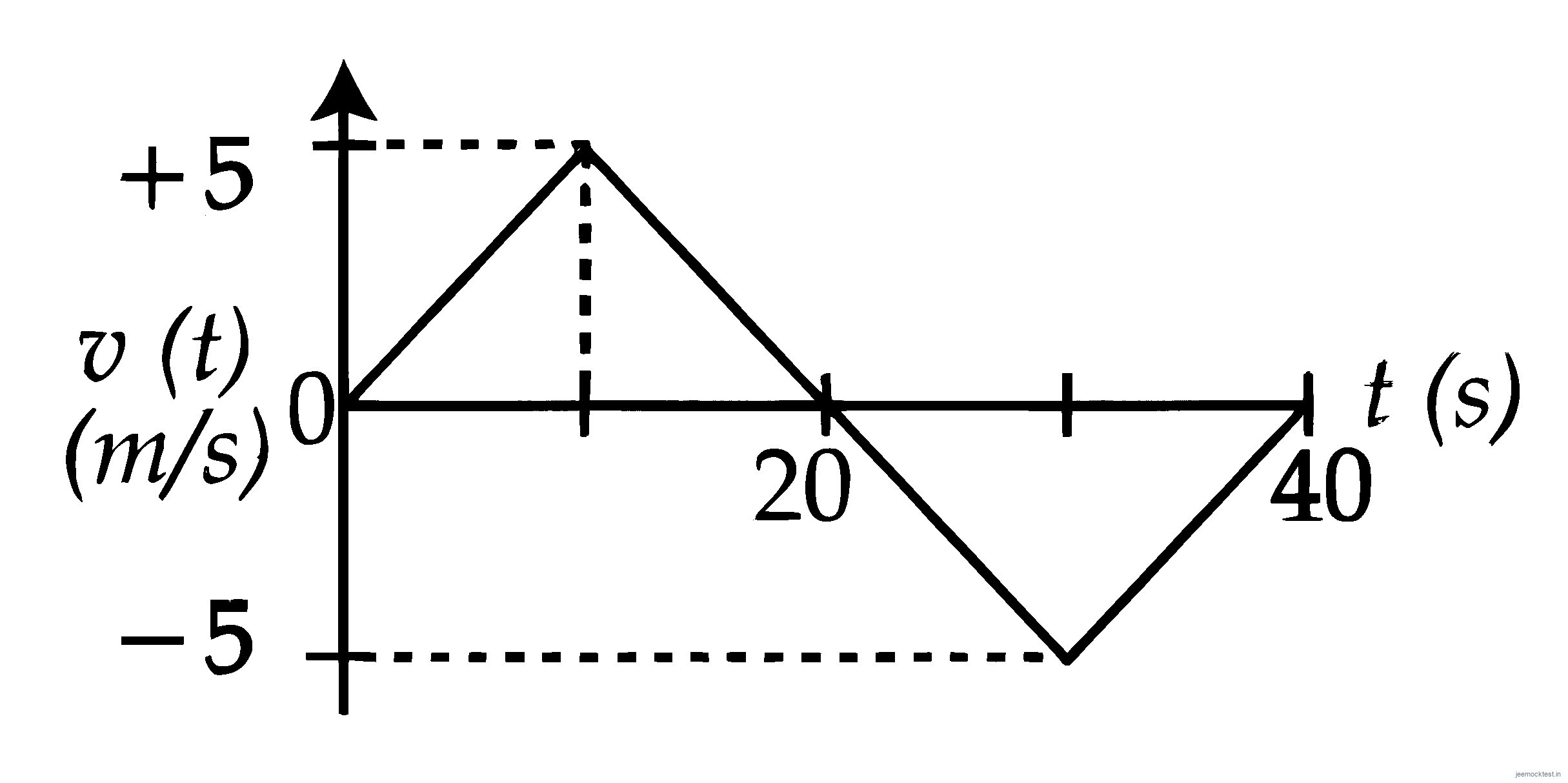
The velocity versus time plot of a particle is shown in the figure, for a time interval of 40 s . The total distance travelled by the particle and the average velocity during this period are, respectively
.
Two cars and are moving in the same direction along a straight line with speeds and , respectively such that car is moving ahead of car . A person in car throws a stone with a speed so that it hits the car with a speed of . The value of is .
A particle starts moving from time and its coordinate is given as
A. The particle returns to its original position (origin) 0.866 units later
B. The particle is 1 unit away from origin at its turning point
C. Acceleration of the particle is non-negative
D. The particle is 0.5 units away from origin at its turning point
E. Particle never turns back as acceleration is non-negative
Choose the correct answer from the options given below :